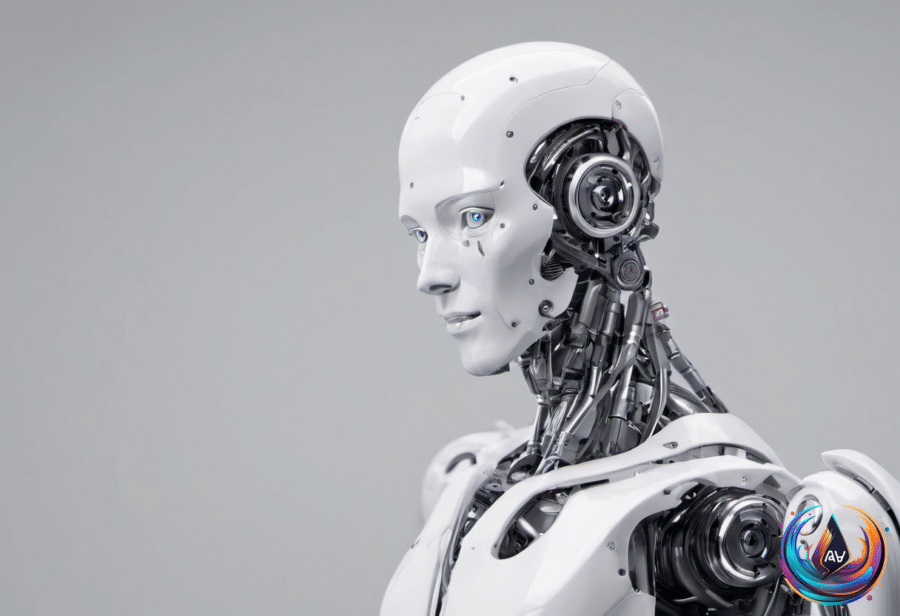
Humanoid robots are moving beyond conversation, dancing, and carefully timed gestures. Some can now mimic human facial expressions with an accuracy that feels less like a machine demonstration and more like an encounter with an unfamiliar person.
The Yansyn-X2 has pushed that feeling into strange new territory. Developed by Yanxi Technology, a Chinese robotics firm based in Ningbo, the robot made headlines after demonstrating that it could cry on command. In footage from the 2026 Inclusion Conference, a demonstrator asks, “Can you shed tears for me?” A tear then rolls down the robot’s face.
The tear is not the result of sadness. It comes from a three-layer technical system that combines conversation analysis, facial movement, and fluid control. An AI algorithm reads the context and tone of a conversation, bionic components shift the robot’s facial features into a sad expression, and a microfluidic system dispenses the tears.
How Yansyn-X2 Creates a Human-Like Reaction
The current Yansyn-X2 remains a static model, though “static” does not mean motionless. It can turn its head, track people, and gesture with its arms. Its crying demonstration focuses on the face, where the robot links a spoken interaction to a visible emotional response.
Future versions are planned to use bionic muscles instead of servo motors for facial changes. That shift would give the robot a different way to move its features, with the goal of making expressions feel closer to natural human movement. Developers are working to improve speed, dexterity, utility, and emotional believability across humanoid machines.
A 2023 study in Frontiers found that robots displaying facial expressions that match emotional tone receive higher ratings for likability, trustworthiness, and human likeness. That finding helps explain why developers keep adding expressions to machines. A robot that responds to the emotional tone of a conversation may be easier to engage with, even when people know the reaction comes from software and mechanical parts.
But realism can create its own problem. Matthias Steinbrecher noted that human-like robots can make people uneasy, while developers build humanoids to look, move, and interact naturally. The closer a machine comes to familiar human behavior, the more people may compare its face and movements with their own experiences.
From Racing Robots to Emotional Support
The crying demonstration sits within a wider push to make humanoid robots useful in everyday settings. At CES 2026, companies showcased LG’s CLOiD, WIRobotics’ Allex, and SwitchBot’s Onero H1. These machines represent the same broad direction: robots designed to perform physical tasks while using human-like form and movement to work around people.
Some demonstrations focus on physical performance. Tiangong Ultra ran the 100-meter dash in 9.39 seconds, beating Usain Bolt’s human record of 9.58 seconds. WIRobotics’ Allex can hold objects weighing up to 6.6 lbs, giving the robot a clear task beyond conversation or display.
Other projects place humanoids in settings where interaction matters more than speed. Japan Airlines began testing an android baggage handler at Haneda Airport in May. The NEO home robot costs $20,000 and can learn household chores with human teleoperators, showing how these machines may combine physical work with remote human guidance.
Japan is also exploring whether humanoids can help tackle loneliness and provide emotional support. That goal gives facial expressions a purpose beyond making a demonstration memorable. A robot that can track a person, respond to conversation, gesture, and display a matching expression may feel more approachable during repeated interactions.
Still, a tear does not prove that a robot feels sadness, and a worried expression does not create an inner emotional life. The Yansyn-X2 demonstrates a connection between language, facial movement, and a physical effect. Its system reads conversational tone, changes the face, and releases liquid at the right moment.
That distinction may matter more as robots enter homes, airports, and other shared spaces. People may welcome machines that handle chores or offer support, but they may also react strongly when those machines look and behave too much like people. Humanoid robotics is now testing both sides of that response: how useful a machine can become, and how believable its emotions should be.
The next step is not simply teaching robots to cry. It is deciding how natural their faces, movements, and reactions should feel when they work beside people. The Yansyn-X2 shows how far that process has moved, one carefully produced tear at a time.
Based on